
Company News, Smoking & Grilling World
Where to Put Thermometer in Brisket: Probe Placement Guide
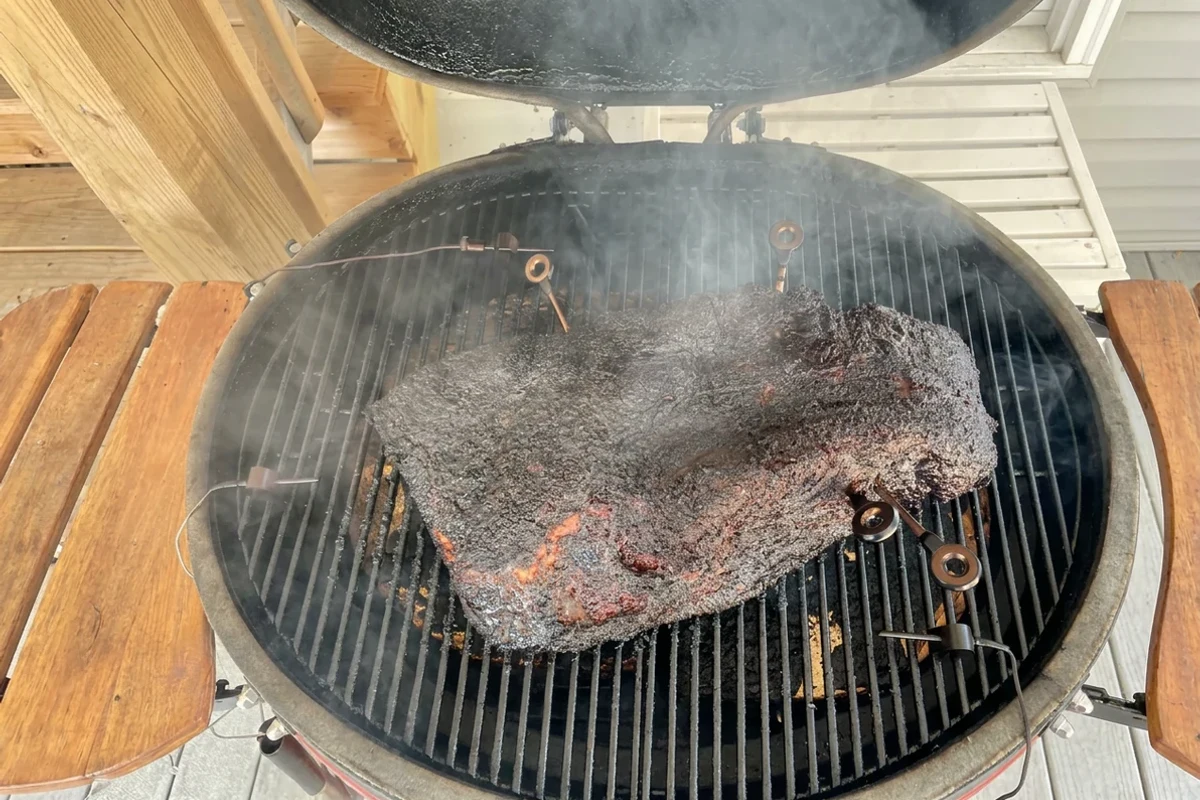
Place the thermometer in the thickest part of the brisket flat, with the sensing area centered midway through the meat. Keep it out of the fat seam, gristle, and the thinner edge of the flat so your reading comes from the meat you are cooking, not the fat around it.
Find the Thickest Part of the Flat
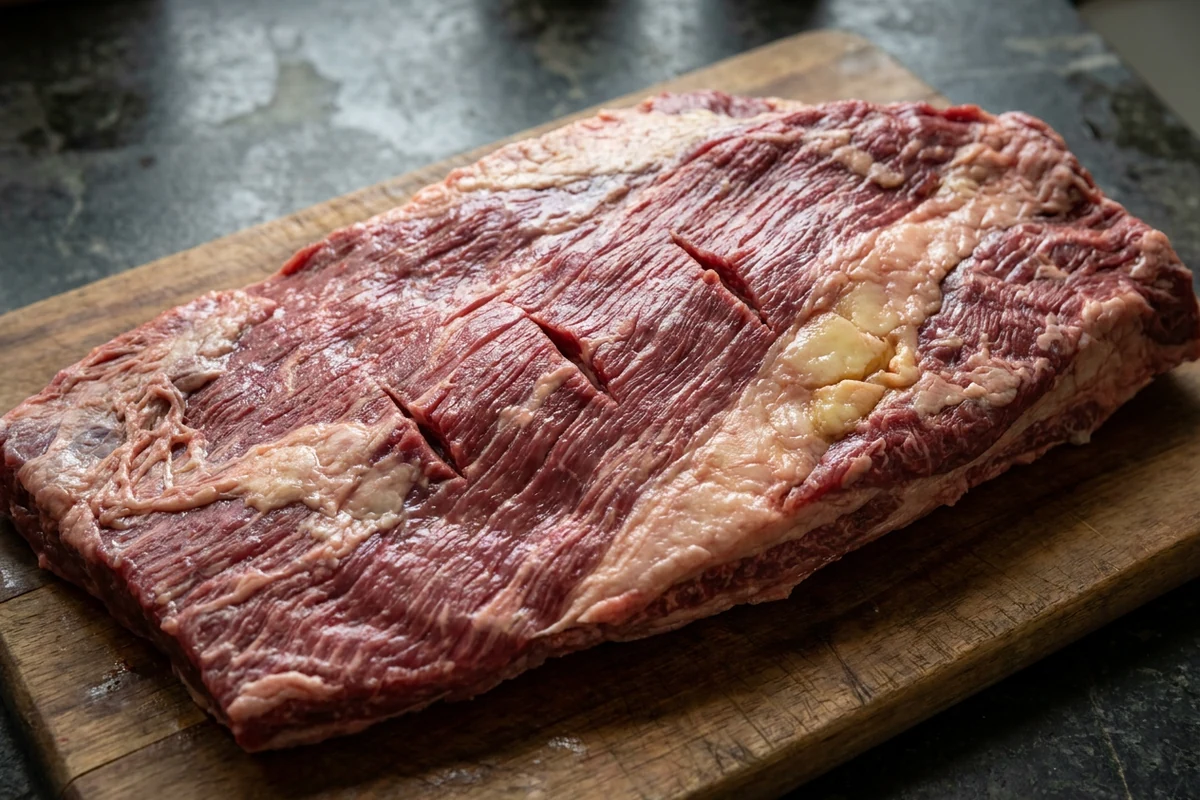
A whole packer brisket has two overlapping muscles. The flat is the broad, relatively even section, while the point forms the thicker mound at one end. Use the thickest meaty area of the flat for your leave-in probe rather than burying it in the point or the fat seam between the muscles.
Before inserting the probe, look at the brisket from the side. Identify the flat’s top and bottom surfaces, then estimate the midpoint between them. The USDA’s food thermometer instructions call for checking a beef roast midway into its thickest part while avoiding fat, gristle, and bone. Brisket is irregular, so checking more than one location can give you a better picture near the end of the cook.
Where you place the probe decides what you learn from the reading. A tip sitting in a thick fat pocket reads that pocket, not the lean meat around it. A probe pushed too far can end up near the opposite surface, and a shallow probe can follow the hotter outer portion of the brisket. Either mistake can make a normal cook look early, late, or erratic.
Set the Probe Depth and Angle
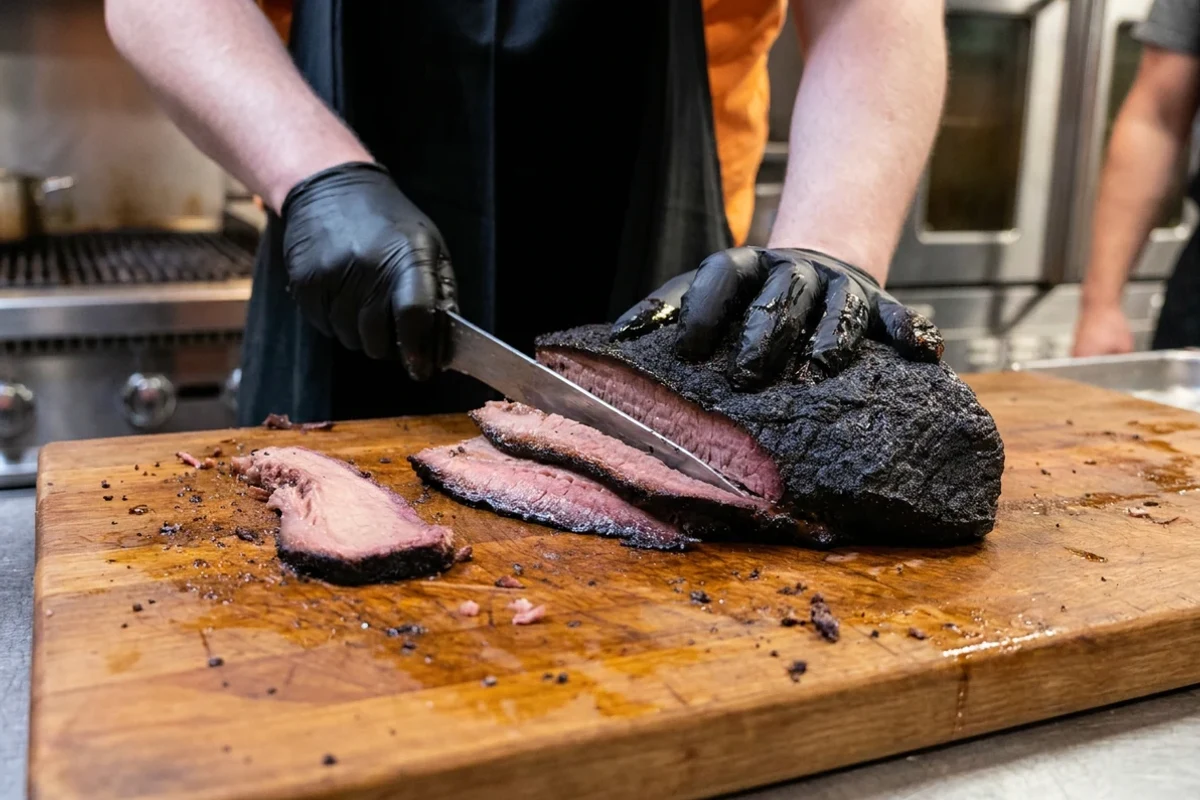
Insert the probe from the side of the flat when that gives you the clearest path to its center. A shallow angle can also work, especially when the brisket’s shape or your smoker’s available space makes a straight side entry difficult. The entry direction matters less than where the sensing portion finishes.
- Estimate the flat’s thickness at your chosen location.
- Guide the probe toward the midpoint between the top and bottom surfaces.
- Stop with the sensing area surrounded by lean meat rather than visible fat.
- Give the probe a gentle final check so it remains secure when the lid closes.
Do not judge depth by the amount of metal still showing outside the brisket. Probe designs differ, and briskets do too. Let the shape of the flat guide you. If the selected area narrows sharply, move to a fuller section rather than aiming through a thin edge at an extreme angle.

Use Meat and Ambient Probes for Different Jobs
The meat probe tracks temperature inside the brisket. The ambient probe tracks the cooking environment at the grilling surface. Clip the ambient probe at grate level in the area where the brisket is cooking, and place the meat probe inside the flat. Keeping those jobs separate makes the session easier to read.
If you are assembling a backyard setup, DDR BBQ Supply is a retailer for smokers, grills, and BBQ supplies, and it stocks FireBoard gear. You can also browse FireBoard’s Probes and Competition Series collections when selecting probes for your cooker and meat.
Keep the Probe Steady During the Stall
The stall is a prolonged period when the internal temperature of a large barbecue cut appears to stop climbing. A flat line during this part of the cook does not, by itself, mean the probe is misplaced or failing.
If the probe was centered correctly and the reading had been progressing normally, leave it in position. Moving it repeatedly during a plateau introduces a new measurement location each time. You might see a jump or drop caused by the move and mistake that change for something happening throughout the brisket.
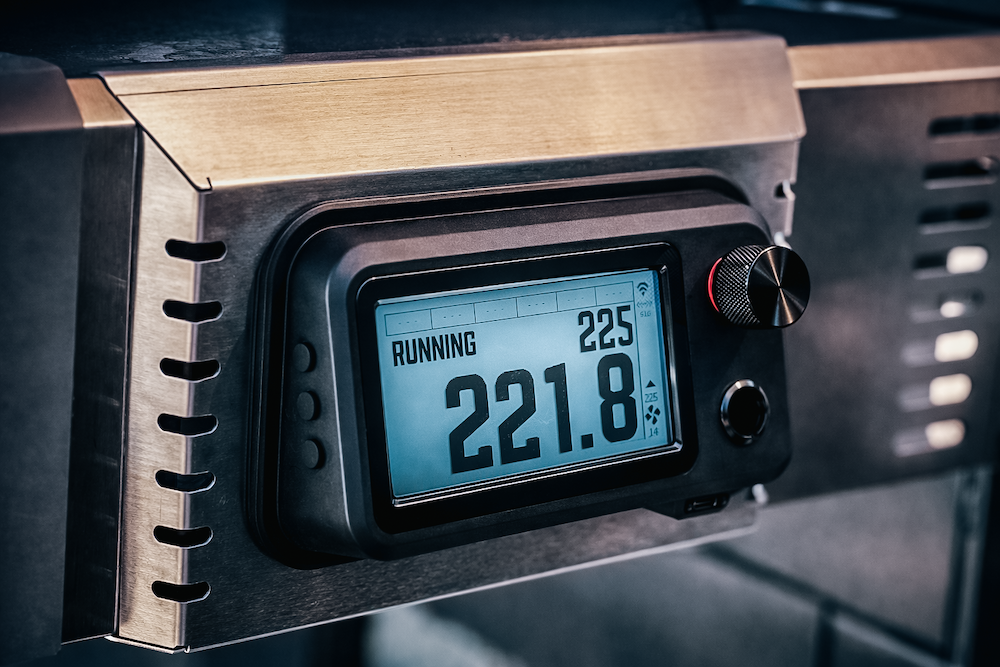
Watch the ambient reading alongside the meat reading. The two traces answer different questions, and the FireBoard app puts both of them on your phone, so you can watch from anywhere and catch a real change without standing over the smoker. A steady cooking environment paired with a slowly moving internal temperature is consistent with a stall. An unexpected change in both readings gives you a reason to inspect the cooker setup before disturbing the meat probe.
Separate Placement Problems From Reading Problems
Start with location when a brisket reading seems wrong. A probe can be working normally while reporting an unhelpful spot. Small changes near the flat’s edge, fat seam, or surface might produce readings that do not represent the center of the meat.
| What You See | What It Might Mean | Useful Next Check |
|---|---|---|
| The temperature changes sharply after the probe moves slightly | You might have pushed the sensing area into fat, or closer to a surface | Check the flat’s thickness and re-center the probe once |
| A second location differs from the leave-in probe | The brisket’s irregular shape might account for the difference | Compare another nearby meaty location before changing the setup |
| Nearby checks agree but the leave-in reading remains implausible | The problem might involve the probe or its connection rather than placement | Inspect the probe and connection away from the hot cooker when practical |
| Meat temperature stalls while ambient temperature remains steady | The brisket might be in a genuine stall | Keep monitoring instead of moving the probe to a new spot |
Near the end of the cook, use additional spot checks to understand the brisket’s uneven shape. Avoid turning one different reading into an immediate verdict. Two or three checks in thick, lean sections are more useful than probing every available inch and collecting temperatures from fat pockets and thin edges.
Apply Temperature Numbers With the Probe in the Right Place
What the number tells you depends on where the probe is sitting. The USDA safe minimum temperature chart lists 145°F with at least a three-minute rest for beef roasts. Barbecue brisket can keep cooking past that point for tenderness, but temperature decisions still depend on measuring thick meat rather than fat or connective tissue.
We manufacture FireBoards locally here in Kansas City, so brisket sessions are familiar territory for our team. Careful probe placement gives your temperature data a clear job from the start, which makes genuine changes in the cook much easier to recognize.
Frequently asked questions
Should I Put a Second Probe in the Brisket Point?
You can use the point as an additional monitoring location, but treat it as separate information. The point and flat are different muscles with different shapes, so their readings do not have to move together.
What Should I Do With the Probe When I Wrap the Brisket?
Keep track of its path as you wrap. If the probe gets pulled out or pushed sideways, guide it back into the center of a thick, lean section of the flat before returning the brisket to the cooker.
Should the Ambient and Meat Probe Temperatures Match?
No. The ambient probe measures the environment at the grate, while the meat probe measures the brisket’s interior. Their temperatures and rates of change serve different purposes.
Can I Insert the Brisket Probe From the Top?
Yes, if the probe’s sensing area finishes midway through the thick meat. Side entry is often easier to judge, but the final position matters more than the entry point.
Stay tuned to our social, email and web channels for the latest information and thanks for taking interest in the FireBoard story!

About Author

Byron Funk
Related posts

Company News, Smoking & Grilling World
From Batteries to FireBoard
The building at 501 Charlotte in Kansas City, MO has housed many different companies. With a major renovation completed, it is now home to Fireboard Labs.

Company News, Smoking & Grilling World
Can We Trust the Temperature?
Made for KC BBQ Championship is more than just a BBQ competition, it’s a future.

Company News, Smoking & Grilling World
Made for KC BBQ Championship
Made for KC BBQ Championship is more than just a BBQ competition, it’s a future.

Company News, Smoking & Grilling World
less waiting more cooking: FireBoard’s Rapid Repair Process
Personal, practical support from a team that knows the products inside and out. That’s the FireBoard Rapid Repair Process.

Company News, Smoking & Grilling World
the MUST HAVE accessory for Kamado Style Grills
The FireBoard 2 Drive bundle is the MUST HAVE accessory for Kamado style grills and is the number one selling product at fireboard.com
Leave a reply